


Nov 22, 2024
Aug 11, 2026
The Wildfire Doesn't Have to Reach You to Disrupt Your Business
.svg)

.svg)
.svg)
.svg)
Key Takeaways
- Wildfire Risk Extends Far Beyond the Flames: Smoke can disrupt operations hundreds or even thousands of miles from an active fire, challenging continuity plans built around geographic proximity and direct physical damage.
- Air Quality Can Become a Business Continuity Event: Hazardous smoke can halt outdoor work, disrupt municipal services, affect transportation and increase employee absenteeism even when facilities, roads and utilities remain intact.
- Hidden Dependencies Can Amplify Disruption: School and childcare closures, employee household conditions and healthcare demand can transmit the effects of distant wildfires into organizations with no direct physical exposure.
- Buildings Are Part of the Resilience Equation: HVAC capacity, filtration, indoor air quality and the ability to change building operating modes can determine whether a workplace remains usable during a severe smoke event.
- Risk Teams May Need to Rethink Geographic Exposure: Wildfire smoke exposes a weakness in traditional business impact analysis: an organization can be geographically distant from a disaster while remaining operationally exposed to it.
Deep Dive
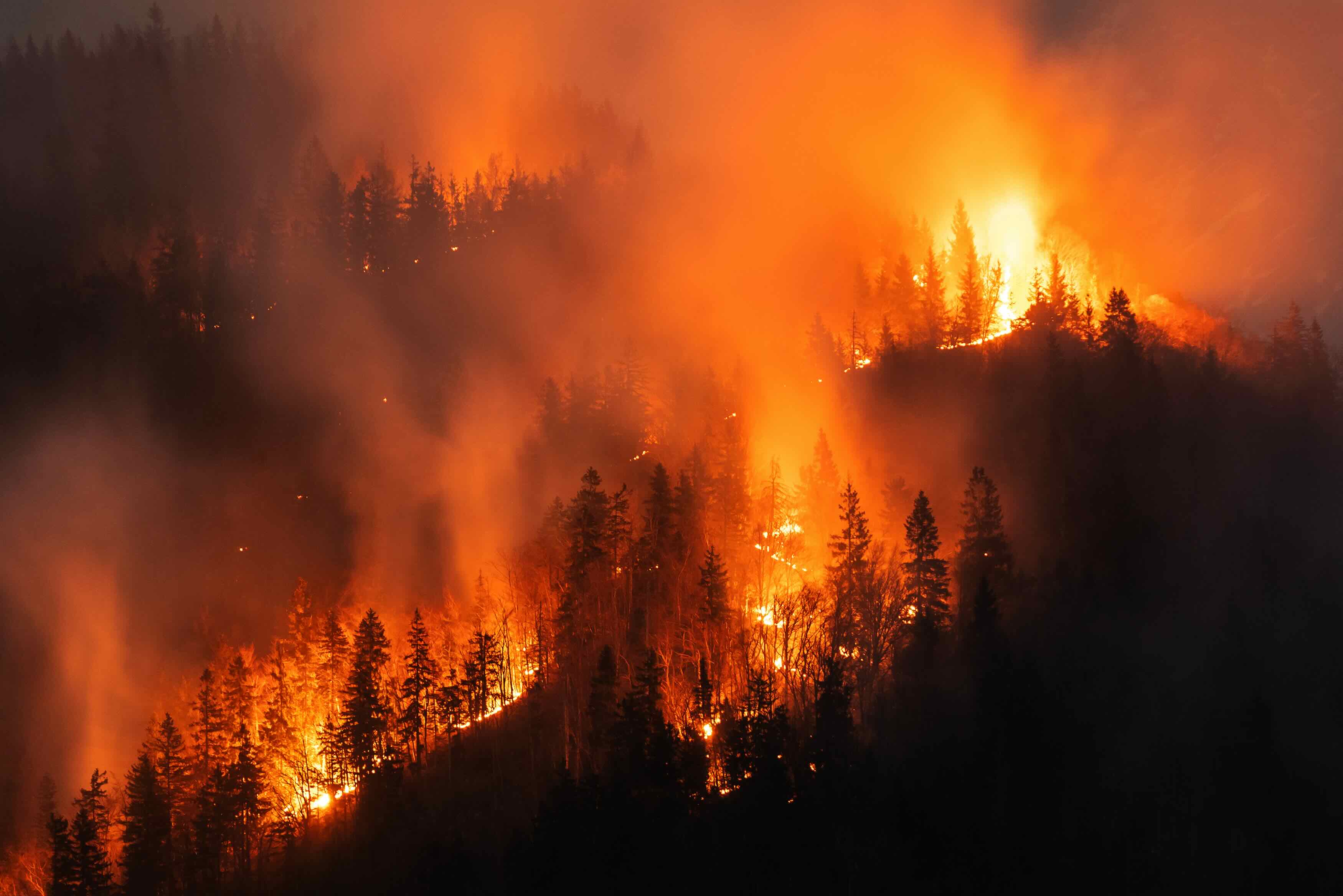
On the morning of July 16, I looked outside in Milwaukee and the city seemed to have misplaced its horizon. The light had that strange, dirty cast that wildfire smoke gives it, and the air smelled faintly burned. This was Wisconsin, not a community evacuating ahead of a fire line. Nothing nearby was burning. The fires were hundreds of miles away, in northern Minnesota near the Boundary Waters and across Canada. Yet by then, the distinction between where the disaster was happening and where its consequences were being felt had become almost meaningless.
Milwaukee recorded a 24-hour Air Quality Index of 414 during the mid-July smoke outbreak, according to preliminary federal data compiled by The Weather Channel, smashing the city's previous smoke-pollution highs. Local readings during the worst hours climbed considerably higher. Milwaukee was hardly alone. Chicago reached a 24-hour AQI of 511 and Detroit 460, while cities from Minnesota to Washington, D.C., recorded some of their worst particulate pollution of this century.
The source was visible from space. By mid-July, nearly 850 wildfires were burning across Canada, while fires that had erupted in and around Minnesota's Boundary Waters were producing what the Minnesota State Climatology Office described as the most intense smoke pollution ever recorded in the state. In parts of Minnesota, pollution reached levels that state officials said appeared substantially worse than any smoke outbreak seen there in at least 50 years.
In Milwaukee, the consequences became less abstract by the hour. The city suspended non-emergency field operations, stopping garbage and recycling collection and closing drop-off centers. Employees who could work remotely were told to do so, while only emergency outdoor work continued. There was no evacuation order, and no building had burned down. Milwaukee had still suffered a business continuity event.
This is important because most organizations know what to do with a wildfire when the fire itself is the threat. Facilities can be mapped against hazard zones, evacuation procedures written and backup sites identified, while insurers and risk teams can put values against exposed property and trace critical suppliers through the same geography. For all the uncertainty of wildfire, the underlying logic is to determine what lies in harm's way and plan for what happens if the flames reach it.
Smoke makes a mockery of this, however. The July plume moved from fires in Canada and northeastern Minnesota across the Great Lakes and into the Northeast. Federal data showed dangerous pollution across Minnesota, Wisconsin, Michigan, northern Illinois and Ohio, while unhealthy air extended much farther east. Detroit registered an air-quality reading of 600 on July 16, according to Reuters, twice the threshold at which the U.S. Environmental Protection Agency classifies conditions as hazardous. Outdoor events were canceled in Minnesota, and Minneapolis closed municipal pools, golf courses and outdoor programming.
For employers, the decisions become uncomfortable quickly because many of them have no satisfying answer. A construction company may have a perfectly usable job site and workers who are physically able to reach it, yet Wisconsin health guidance recommends canceling, rescheduling or moving work indoors when AQI reaches very unhealthy or hazardous levels. When work cannot stop, employers are advised to provide filtered breaks and respiratory protection. The same calculation confronts utility crews, landscapers, transportation workers and delivery drivers whose jobs cannot simply be carried through a laptop.
Then the disruption moves one dependency outward. A school or summer program cancels outdoor activities or closes because the air is unsafe. The organization across town remains open, but some of its employees suddenly have children at home. Wisconsin health officials explicitly warn that severe air-quality events can produce missed work and strain family resources when schools, camps and childcare facilities close. A fire burning hundreds of miles away has now traveled, operationally speaking, from a forest to a school and from the school into an employer that may have no obvious connection to either.
That is the kind of dependency that rarely appears on a map. Organizations are generally good at showing who supplies a component, where a distribution center sits or which application depends on which server. They are less likely to capture the fact that a warehouse depends, in part, on a functioning childcare system, or that a hospital's staffing assumptions rest on hundreds of separate households remaining operational.
Hospitals encounter the problem from the other direction. Wildfire smoke is dominated by fine particulate matter capable of penetrating deep into the lungs, and public-health guidance associates exposure with respiratory and cardiovascular effects. A healthcare organization can therefore experience the same event twice, first through increased demand from the community and then through its own workforce, whose employees are breathing the same air.
At that point, the building itself becomes part of the control environment. Can it actually keep the smoke out? EPA guidance for schools and commercial buildings recommends measures that can include adjusting ventilation, maintaining positive building pressure and improving filtration. NIOSH likewise advises employers to consider high-efficiency filtration and portable air cleaners, while closing building openings and temporarily reducing outdoor-air intake where appropriate.
Those measures sound mundane until an organization has to rely on them. An office designed around ordinary ventilation assumptions may require upgraded filters or portable filtration. Older HVAC equipment may not accommodate the filtration level an organization would prefer, while loading docks and frequently opened doors complicate matters for warehouses and industrial sites. Filters also have to be stocked before everybody in the region discovers they need the same ones. Someone needs to know when the building should shift operating modes, and someone needs the authority to make that call.
Facilities spending rarely receives the attention given to cyber recovery or supply-chain redundancy in a business impact analysis. During a smoke event, however, the ability to produce clean indoor air can determine whether a building is genuinely available for occupancy.
That creates an odd complication for return-to-office planning. Companies spent years building policies around the circumstances under which employees should be physically present, much of that thinking shaped by the pandemic while older continuity plans still carried assumptions formed around snowstorms, hurricanes and power outages. Wildfire smoke presents something different. The roads may be clear, the electricity on and the building standing exactly where it stood yesterday. Yet the question of whether people should be there remains unresolved.
Sending employees to the office may reduce their exposure if the building has effective filtration. It may accomplish the opposite if nobody has tested that assumption. The difference is unlikely to remain theoretical. As of Aug. 11, wildfires in British Columbia had forced thousands of people from their homes and prompted Canada to put military personnel on standby, while major fires were also burning across parts of the western United States. Canada remained at its highest wildfire preparedness level, with hundreds of active fires. Smoke from western Canada and the Pacific Northwest was again moving across the continent, though much of the latest plume was expected to remain higher in the atmosphere than the punishing mid-July outbreak.
The temptation will be to treat episodes like these as another climate-risk scenario and add wildfire smoke somewhere beneath extreme weather in the enterprise risk register. That would be tidy. It would also miss what makes smoke interesting. The more difficult problem is geographic.
Traditional continuity planning has a strong sense of place. A facility floods. A supplier sits in an earthquake zone. A hurricane approaches a distribution center. A wildfire threatens a town. Geographic concentration becomes a risk because the hazard and the asset occupy, or may soon occupy, the same piece of ground. Smoke separates them.
A fire can burn in Ontario while a public-works department stops collecting garbage in Milwaukee and Chicago. Fires near the Boundary Waters can cancel activities in Minneapolis and help push dangerous pollution toward cities hundreds of miles farther east. An organization can be geographically diversified from the disaster itself and remain operationally exposed to what the atmosphere carries away from it.
That changes what belongs inside the radius of a business impact analysis. The relevant map may need to account for prevailing winds alongside property lines and employee households alongside offices. Schools and childcare providers can become dependencies without ever appearing in a supplier register. The single point of failure may turn out to be the filtration system everyone previously regarded as a maintenance expense.
It also raises a harder question than whether wildfire smoke deserves another entry on the risk register: how far away does a disaster have to be before an organization is allowed to stop calling it its own risk? The answer is becoming harder to draw on a map. A business can sit a thousand miles from the flames with its buildings untouched, its electricity running and every road leading to its doors still open. And someone may still have to decide whether it is safe to open them.
The GRC Report is your premier destination for the latest in governance, risk, and compliance news. As your reliable source for comprehensive coverage, we ensure you stay informed and ready to navigate the dynamic landscape of GRC. Beyond being a news source, the GRC Report represents a thriving community of professionals who, like you, are dedicated to GRC excellence. Explore our insightful articles and breaking news, and actively participate in the conversation to enhance your GRC journey.
🔒
Continue reading with Access
Get full access to this analysis and everything else on GRC Report—enforcement databases, custom alerts, and market intelligence.
Get Access →
Already a member?
Sign In
Cancel anytime
Full archive access
Custom alerts
Sponsored by
