


Dec 16, 2025
Dec 19, 2025
ASIC Wraps Up the Year With Heavy Court Outcomes for Macquarie Securities, RM Capital, & ANZ
.svg)

.svg)
.svg)
.svg)
Key Takeaways
- Market Data Failures Draw Serious Consequences: Macquarie Securities admitted to misleading conduct after misreporting hundreds of millions of short sales over more than a decade, prompting ASIC’s first civil action focused on short-sale reporting failures.
- Licensee Oversight Remains Non-Negotiable: The Federal Court made clear that AFSL holders cannot treat oversight of authorised representatives as optional, fining RM Capital and SMSF Club for sustained breaches of conflicted remuneration rules.
- Systemic Non-Financial Risk Is Front and Center: The penalties against ANZ reflect a judicial and regulatory focus on failures that cut across governance, risk management, and operational controls rather than isolated misconduct.
- Consumer Harm Carries Escalating Penalties: From unpaid savings interest to delayed hardship responses and mishandled deceased estates, retail banking failures affecting tens of thousands of customers attracted substantial sanctions.
- Penalties Are Not a Cost of Doing Business: The Court reinforced that large, deterrent penalties are intended to force structural change, particularly where institutions allow control failures to persist for years.
Deep Dive
A decade of misreported market data, years of conflicted advice, and widespread failures affecting tens of thousands of customers all landed before the courts this week, as ASIC secured three major enforcement outcomes against Macquarie Securities, RM Capital, and ANZ. The decisions span institutional trading, advice oversight, and retail banking operations.
All three matters were announced on 19 December and span institutional trading, advice oversight, and everyday retail banking obligations, underscoring ASIC’s growing emphasis on non-financial risk, data integrity, and basic consumer protections.
The most far-reaching of the three actions landed at Macquarie Securities, which has admitted to misleading conduct tied to the misreporting of short sales over a period stretching back to 2009. ASIC and Macquarie Securities will ask the New South Wales Supreme Court to impose a penalty of approximately $23.5 million (AUD $35 million), subject to court approval.
According to agreed facts filed with the Court, Macquarie Securities failed to correctly report at least 73 million short sales between December 2009 and February 2024, with ASIC estimating the true scale of misreporting could be as high as 1.5 billion short sales. The errors were driven by multiple system and process failures, many of which went undetected for more than a decade. The firm also admitted to incorrectly reporting regulatory data for more than 633,000 market orders submitted between late 2022 and early 2023.
ASIC Chair Joe Longo said accurate short-sale and regulatory data is foundational to market confidence, particularly during periods of volatility, warning that transparency collapses quickly when firms fail to maintain robust reporting systems.
The case is ASIC’s first civil action focused specifically on short-sale reporting and forms part of a broader push to hold large institutions accountable for long-running compliance failures that quietly distort market oversight.
That same theme, compliance obligations treated as peripheral rather than core, surfaced in a Federal Court decision involving RM Capital and its authorized representative, The SMSF Club. The Court ordered penalties totaling approximately $620,000 (AUD $925,000) after finding sustained breaches of Australia’s conflicted remuneration laws.
RM Capital was fined approximately $385,000 (AUD $575,000) for failing to take reasonable steps to prevent its representative from accepting conflicted payments, while SMSF Club was ordered to pay approximately $235,000 (AUD $350,000) for repeatedly accepting referral fees linked to property purchases made through self-managed superannuation funds.
Between 2014 and 2016, SMSF Club received $91,000 (AUD $135,863.65) in referral fees from Positive RealEstate, payments the Court found breached Corporations Act provisions designed to prevent financial advice from being skewed by commercial incentives.
Justice Jackson acknowledged RM Capital’s limited size but made clear that holding an Australian financial services license carries non-negotiable responsibilities. Even in the face of ASIC investigations and adverse findings, the firm’s passive approach to oversight persisted, leading the Court to conclude that a meaningful penalty was necessary to drive change.
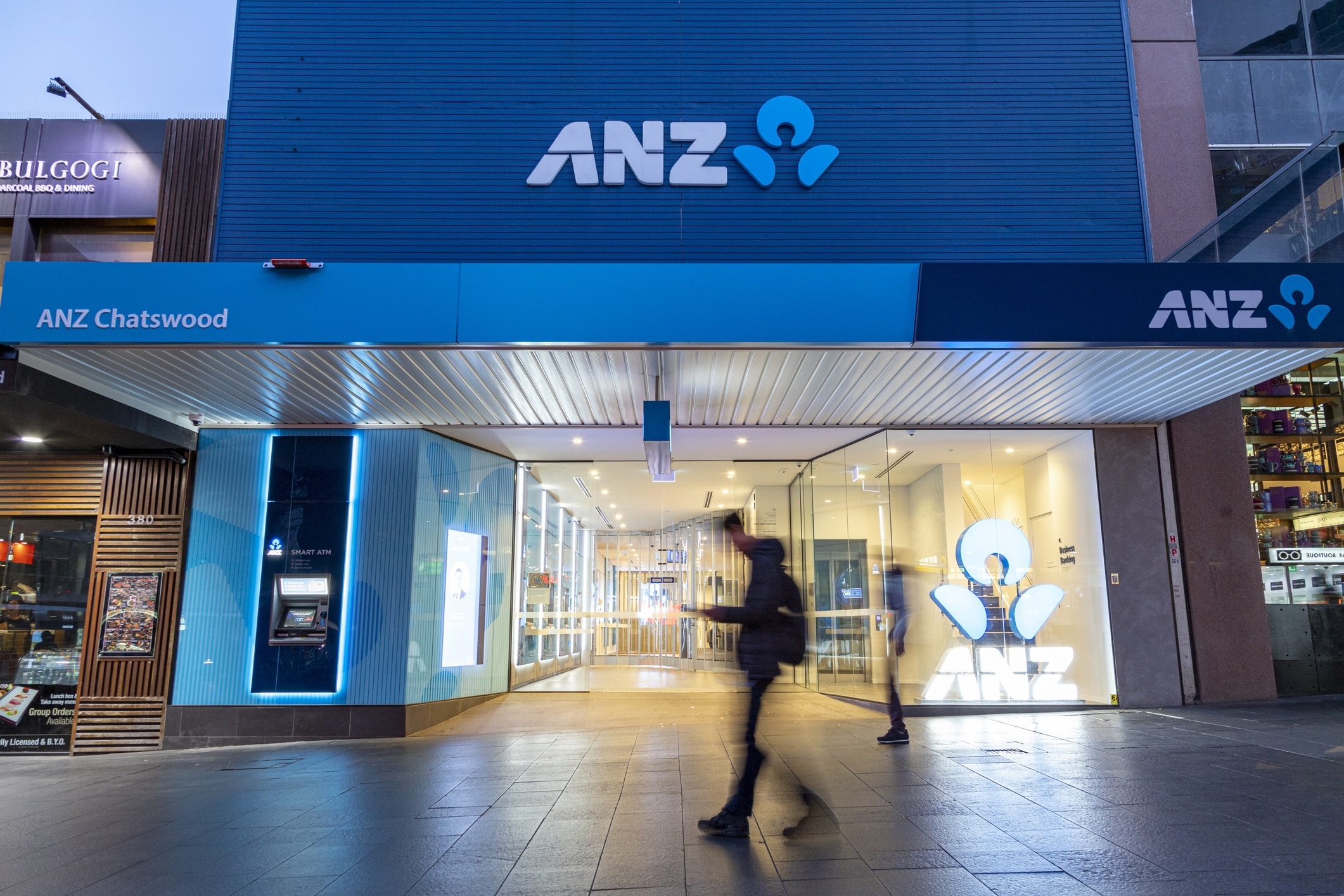
The most consequential ruling of the day, however, came against Australia and New Zealand Banking Group, which was ordered to pay a combined $168 million (AUD $250 million) in penalties for misconduct spanning both its institutional and retail banking operations.
Justice Jonathan Beach described the penalties (the largest combined sanction ASIC has ever secured against a single entity) as reflecting misconduct that affected the Australian Government, taxpayers, and at least 65,000 retail customers.
The Court imposed $91 million (AUD $135 million) for institutional and markets misconduct, including unconscionable conduct tied to a $14 billion government bond deal and the misreporting of secondary bond market turnover data. Justice Beach increased the penalty for the misreporting component alone to $33.5 million (AUD $50 million), calling the conduct “inexcusable” and devoid of any redeeming feature.
ANZ was also ordered to pay $27 million (AUD $40 million) for failing to respond to hundreds of customer hardship notices, $27 million (AUD $40 million) for misleading customers about savings interest rates and underpaying tens of thousands of accounts, and $23.5 million (AUD $35 million) for failures related to fees charged to deceased customers and delays in handling estates.
ASIC Chair Joe Longo said the penalties reflected not just the seriousness of the breaches, but their breadth, warning that inaccurate reporting and weak controls exposed public institutions to harm and eroded trust across the system. Justice Beach echoed that view, stressing that penalties should never be absorbed as a cost of doing business, particularly where basic banking obligations were neglected for years.
Whether the issue is market data, advice incentives, or customer treatment, long-running control failures, especially those that go undetected or unaddressed for years, are increasingly being met with penalties designed to force real change, not quiet remediation.
The GRC Report is your premier destination for the latest in governance, risk, and compliance news. As your reliable source for comprehensive coverage, we ensure you stay informed and ready to navigate the dynamic landscape of GRC. Beyond being a news source, the GRC Report represents a thriving community of professionals who, like you, are dedicated to GRC excellence. Explore our insightful articles and breaking news, and actively participate in the conversation to enhance your GRC journey.
🔒
Continue reading with Access
Get full access to this analysis and everything else on GRC Report—enforcement databases, custom alerts, and market intelligence.
Get Access →
Already a member?
Sign In
Cancel anytime
Full archive access
Custom alerts
Sponsored by
