



 Access Login

Jun 17, 2024
Jul 3, 2026
EU Adopts Streamlined Sustainability Reporting Standards as Omnibus Reforms Advance
.svg)

.svg)
.svg)
.svg)
Key Takeaways
- Major Reduction in Reporting Requirements: The revised European Sustainability Reporting Standards reduce mandatory datapoints by more than 60% and total datapoints by more than 70%.
- Lower Compliance Costs: The European Commission expects the streamlined standards to reduce sustainability reporting costs by more than 30% per company while supporting its broader burden-reduction objectives.
- Voluntary Standard for Smaller Companies: A new voluntary sustainability reporting standard provides a proportionate reporting framework for companies outside the scope of the Corporate Sustainability Reporting Directive.
- New Value Chain Cap: Companies subject to the CSRD will be prohibited from requesting sustainability information from value chain partners beyond what is included in the voluntary reporting standard.
- Next Step in the Legislative Process: The delegated acts will now undergo scrutiny by the European Parliament and the Council of the European Union before taking effect.
Deep Dive
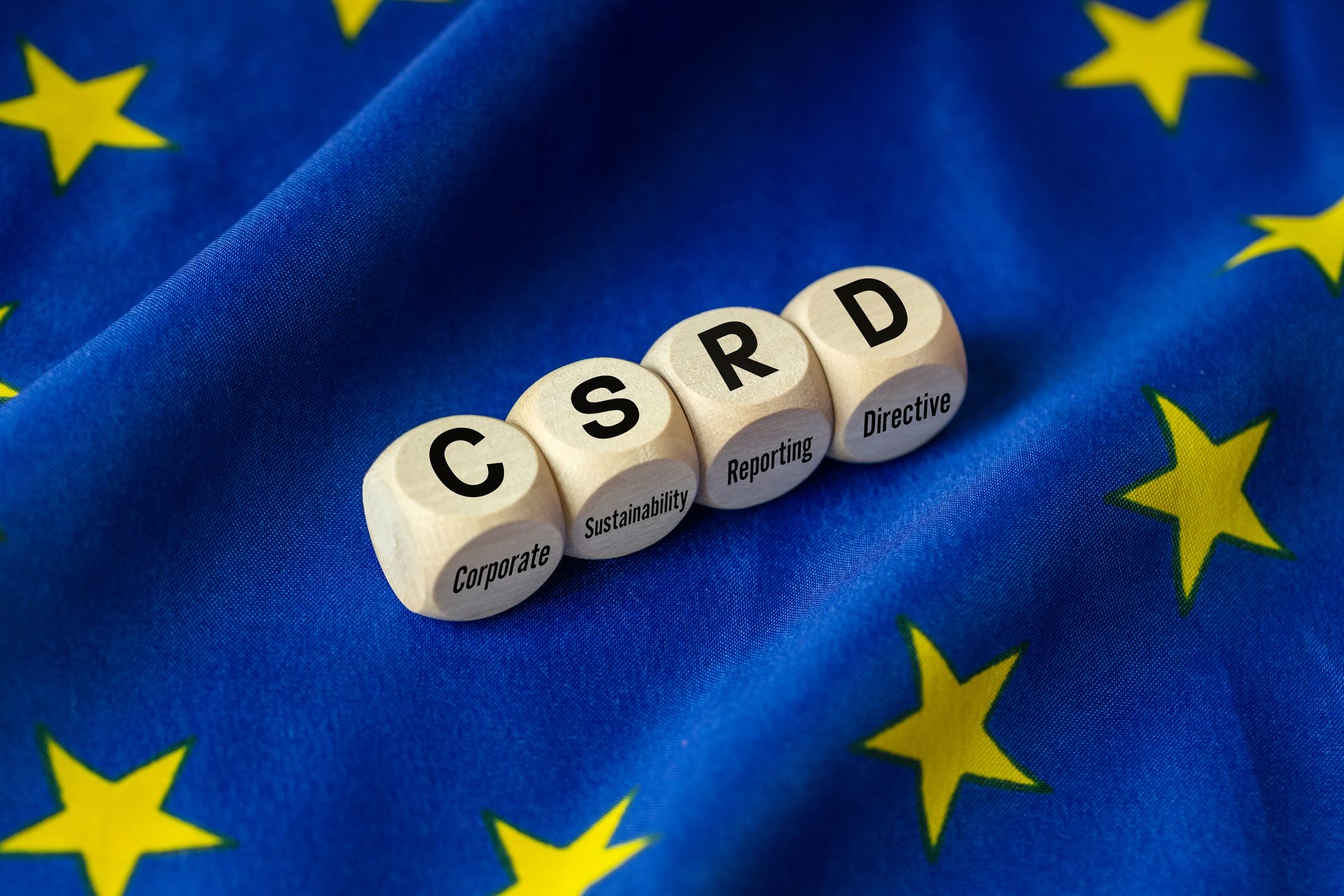
The European Commission has adopted revised European Sustainability Reporting Standards (ESRS), delivering the most substantial simplification of the European Union's sustainability reporting framework since the Corporate Sustainability Reporting Directive (CSRD) began reshaping corporate disclosure obligations.
The revisions, adopted alongside a new voluntary sustainability reporting standard for smaller companies, are the latest step in the Commission's Omnibus I simplification package. After months of technical revisions, consultation and political negotiation, the question is no longer whether the reporting framework would be streamlined, but how much of it could be simplified without weakening the information investors and other stakeholders rely upon.
The Commission's answer is measured in datapoints. The revised ESRS reduce mandatory datapoints by more than 60% and the total number of datapoints by more than 70%. They also introduce additional flexibilities, simplify key reporting processes and rewrite the standards to be shorter and clearer. The changes are expected to reduce reporting costs by more than 30% per company, contributing to the Commission's broader objective of cutting burdens associated with reporting requirements by 25%.
What remains unchanged is the purpose of the framework itself. Companies will continue to report on environmental, social and governance matters, including climate change, biodiversity and human rights, with disclosures intended to help investors and other stakeholders understand both the sustainability-related risks businesses face and their impacts on people and the environment.
A Narrower Framework, Not a Different One
The revisions reflect a process that has unfolded over more than a year. According to the Commission, the final standards incorporate technical advice from EFRAG, formerly known as the European Financial Reporting Advisory Group, drawing on stakeholder input gathered during the spring of 2025 and a public consultation on draft standards held later that summer. Earlier this year, the Commission also sought additional feedback through a Have Your Say consultation as it considered targeted changes designed to ease reporting obligations without undermining the CSRD's policy objectives.
Alongside the revised ESRS, the Commission adopted a voluntary sustainability reporting standard for companies outside the scope of the CSRD. Rather than creating another reporting regime, the framework is intended to provide smaller businesses with a single, proportionate reference point when responding to sustainability information requests from large companies and financial institutions.
The voluntary standard also introduces what the Commission describes as a value chain cap. Companies subject to the CSRD will not be permitted to require businesses within their value chains to provide sustainability information beyond what is covered by the voluntary reporting standard, limiting the extent to which reporting obligations can flow indirectly through commercial relationships.
The delegated act revising the ESRS and the delegated act establishing the voluntary reporting standard will now be transmitted to the European Parliament and the Council of the European Union for scrutiny. The measures will apply after the initial two-month scrutiny period expires, unless that period is extended by a further two months.
For companies that have spent the past year tracking the evolution of the Omnibus reforms, Friday's announcement provides the clearest picture yet of where the Commission believes the balance now lies. The direction of travel has not changed and Europe remains committed to comprehensive sustainability reporting, but the route has been made appreciably shorter.
The GRC Report is your premier destination for the latest in governance, risk, and compliance news. As your reliable source for comprehensive coverage, we ensure you stay informed and ready to navigate the dynamic landscape of GRC. Beyond being a news source, the GRC Report represents a thriving community of professionals who, like you, are dedicated to GRC excellence. Explore our insightful articles and breaking news, and actively participate in the conversation to enhance your GRC journey.
🔒
Continue reading with Access
Get full access to this analysis and everything else on GRC Report—enforcement databases, custom alerts, and market intelligence.
Get Access →
Already a member?
Sign In
Cancel anytime
Full archive access
Custom alerts
Sponsored by
