



 Access Login

Sep 13, 2026
Oct 5, 2026
SEC Fines Latch $1 Million After Revenue Overstatements Spanned Its SPAC Deal
.svg)

.svg)
.svg)
.svg)
Key Takeaways
- Revenue Was Overstated for Years. Latch ultimately determined that it had overstated revenue by approximately 107% in 2019, 39% in 2020 and 50% in 2021.
- Weak Controls Met an Aggressive Sales Culture. The SEC found that sales personnel used side agreements containing return rights, payment conditions and other terms that frequently did not reach Latch’s finance and accounting teams.
- The Problems Reached Its SPAC Transaction. Materially overstated 2019 and 2020 revenue appeared in filings connected with Latch’s 2021 SPAC merger, which brought the company approximately $450 million in cash proceeds.
- Restating the Books Took Years. Latch ultimately had to reconstruct its records and review thousands of transactions before filing restated financial statements in December 2024.
- Latch Will Pay $1 Million. The company agreed to the civil penalty and a cease-and-desist order without admitting or denying the SEC’s findings, except as to the Commission’s jurisdiction and the subject matter of the proceedings. Pasted markdown
Deep Dive
In December 2020, Latch shipped $147,000 worth of hardware to one of its channel partners, but there was a catch. The partner could send all of it back, without consequence, if the building developer behind the order decided not to proceed. That condition was written down, but it simply never made its way to the people doing the accounting. Latch booked the $147,000 as revenue anyway. About six months later, the hardware came back.
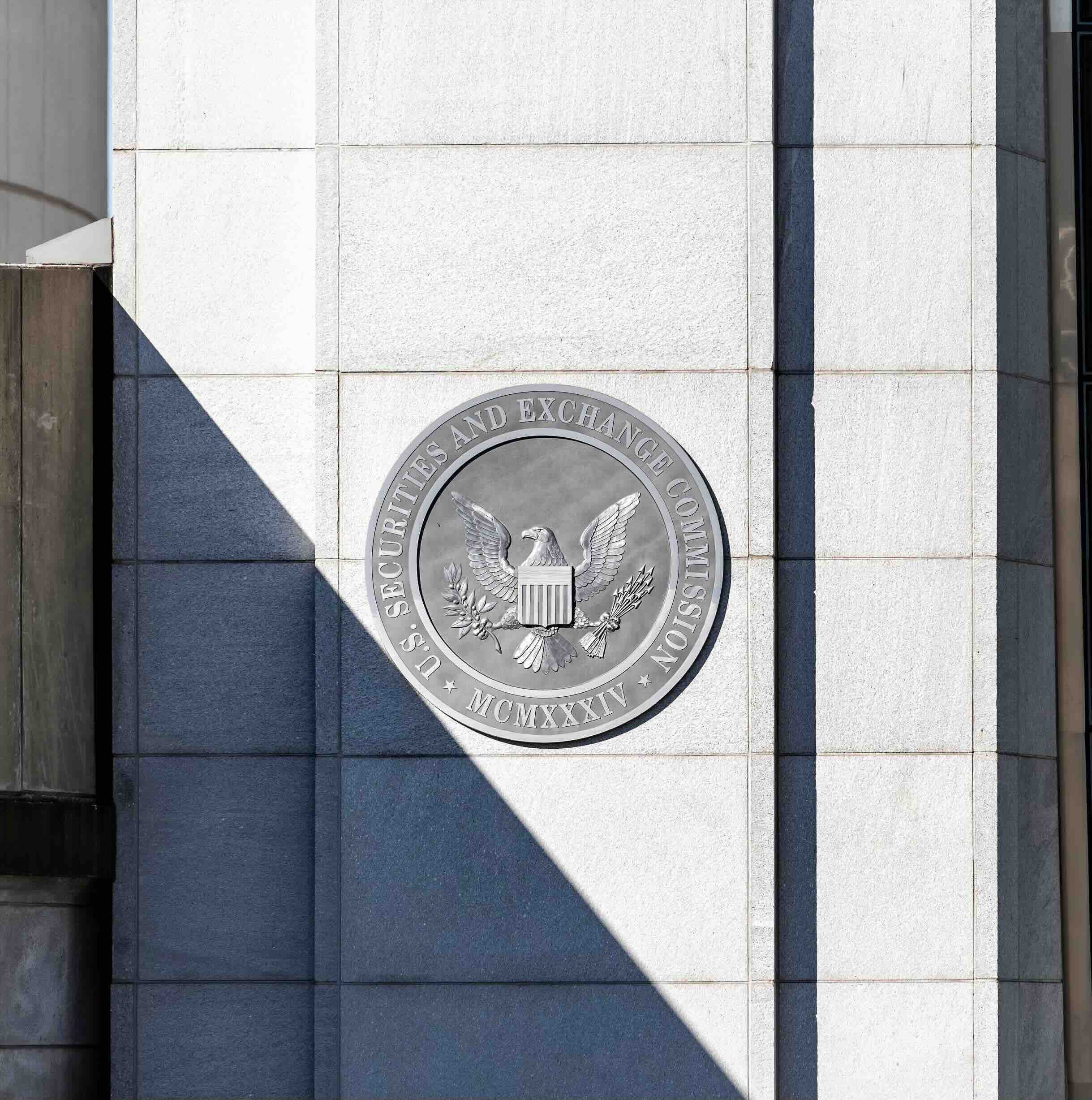
The transaction is one of several laid out by the Securities and Exchange Commission in an enforcement order against Latch Inc., the smart-access company whose accounting problems eventually forced it to reconstruct years of financial statements. The SEC found that Latch materially overstated revenue from at least January 2019 through March 2022, a period that included its transformation from a private company into a publicly traded one through a SPAC merger that brought in approximately $450 million in cash.
Latch agreed to pay a $1 million civil penalty and cease and desist from future violations. It settled without admitting or denying the SEC's findings, except for admitting the Commission's jurisdiction over it and the subject matter of the proceedings.
By the time Latch finished restating the numbers in December 2024, the difference between what investors had originally been told and what the company ultimately determined was correct was difficult to mistake. Revenue had been overstated by approximately 107% in 2019, 39% in 2020 and 50% in 2021. Reported 2019 revenue of $14.9 million became $7.2 million. In 2021, $41.4 million became $27.6 million.
The SEC's order explains how a company gets that far from its own books. It was not one accounting decision repeated for three years. Latch had several problems working at once, and they tended to reinforce one another.
The company had grown rapidly after its first commercial sale in 2016. Its accounting controls did not keep up. Sales personnel were under pressure to meet short-term targets and personal quotas, and the SEC found that they aggressively sought purchase orders that would allow Latch to ship hardware and record sales. Sometimes that meant persuading channel partners to take products before the end customer actually needed them.
Sales personnel offered arrangements that could include unconditional return rights, extended or conditional payment terms, free storage, or orders for hardware that did not yet have a specified customer project behind them. Those terms were documented, when they were documented at all, in side agreements outside the purchase or sales orders on which the company's accounting process relied.
Latch recognized hardware revenue when products were shipped to customers or channel partners. But shipment was not enough if the agreement sitting behind it meant control had not actually transferred under the company's own revenue-recognition policy and Accounting Standards Codification Topic 606.
There was supposed to be a way for the accounting department to know about those arrangements. Sales personnel could enter the relevant terms into the company's sales system and upload documents or notes concerning side agreements. The information would then move into an accounting system for review.
The weakness was almost embarrassingly practical. Latch had no sufficient mechanism to make sure salespeople actually entered the information. According to the SEC, they rarely, if ever, did. That left the finance and accounting staff making decisions without knowing all the terms of the deals they were accounting for. The December 2020 transaction was one result. Another came in March 2021, days before the quarter closed, when Latch shipped approximately $474,000 of hardware to a channel partner.
Again, there was more to the deal than the accounting team knew. The partner could return the hardware without consequence. It also did not have to pay Latch until it had first been paid by the building developer, and nobody knew when that would happen.
Latch nevertheless recognized approximately $474,000 in revenue during the first quarter of 2021. Years later, while reconstructing its accounts, the company concluded that the revenue should have been recognized in later periods. Approximately $350,000 belonged in the second quarter of 2023 or later. The original recognition had been more than two years early.
Not every questionable dollar came from a side agreement. Latch also had trouble with the more elementary question of whether the customer on the other side of a sale was likely to pay.
Its accounting policies required collectability to be probable before revenue could be recognized. Yet the SEC found that Latch lacked sufficient internal controls to make that assessment reliably. During the relevant period, the company recognized nearly $5.7 million in revenue involving one channel partner from which it collected just $300,000 in cash, even as significant receivables from that partner remained past due. Pricing introduced another problem.
Latch gave channel partners discounts known internally as "distributor cuts," often worth more than 20% of the hardware's retail price. Because those partners could pass some or all of the discount along to developers, Latch needed the eventual sell-through price to determine the proper transaction price under its accounting policies. For years, it often did not have it.
From 2019 through August 2021, Latch's policies required channel partners to provide sell-through pricing when the company requested it. The SEC found that Latch rarely, if ever, made the request. The company later changed its policy to require the information in purchase orders, but did not adequately enforce that requirement either.
Instead, Latch relied on prices contained in nonbinding letters of intent with building developers, despite the fact that channel partners could alter the price ultimately charged. Those transaction-price errors alone produced hardware revenue overstatements of $3.7 million in 2019, $4.1 million in 2020 and $4.5 million in 2021. The timing of all this gave the accounting failures consequences beyond an inaccurate quarterly report.
Latch announced its merger with a special purpose acquisition company in January 2021. Its 2019 and 2020 financial statements, both containing materially overstated revenue, appeared in SEC filings connected with the deal, including the prospectus and proxy statement sent to investors. The merger closed in June and provided Latch with approximately $450 million in cash proceeds.
The company continued reporting materially overstated revenue after becoming publicly traded, including in registration statements and its periodic and current reports through the first quarter of 2022. Then the numbers began to come apart.
Latch's audit committee opened an internal investigation in mid-2022 after allegations of improper sales practices. By January 2023, the company had concluded that its financial statements for 2019 and 2020, its 2021 annual report and quarterly reports covering the second quarter of 2021 through the first quarter of 2022 were materially misstated and could no longer be relied upon. Getting from that admission to corrected accounts took nearly two years.
Latch filed its restated annual report on Dec. 19, 2024. By then, according to the SEC, the company had replaced nearly its entire workforce, including management, and hired more experienced finance and accounting personnel. Its historical records presented a deeper problem. Latch determined that it could not reliably tell which transactions had been accounted for correctly when they were first recorded. So it rebuilt the books.
Thousands of sales orders, cash transactions and software contracts had to be reviewed. Revenue was restated to the earlier of cash receipt or execution of the software contract. The exercise cut 2019 revenue from $14.887 million to $7.187 million, 2020 revenue from $18.061 million to $12.995 million and 2021 revenue from $41.360 million to $27.613 million.
The first quarter of 2022, by comparison, required only a relatively small adjustment, from $13.655 million to $13.556 million. The SEC found that Latch violated Securities Act provisions governing materially false or misleading statements and fraudulent or deceptive practices in securities offerings, along with Exchange Act requirements covering company reports, books and records, internal accounting controls and proxy statements.
There is an important piece on the other side of the enforcement action. The SEC expressly considered Latch's cooperation and remediation when accepting the settlement.
After discovering the potential misconduct, the company hired outside counsel to conduct an investigation overseen by its audit committee. It reported the investigation's findings to SEC staff, supplied documents and explanations, and had company leadership meet with the Commission. Latch also changed personnel across management, finance, sales and accounting, developed training and introduced new controls over accounting, monitoring, risk assessment and financial reporting, including changes to its Sarbanes-Oxley compliance program. The Commission imposed a $1 million penalty, payable in four quarterly installments of $250,000.
It is tempting to reduce a case like this to the final restatement percentages because they are startling numbers. The more useful part of the order comes earlier, in the machinery that produced them. Salespeople knew things accountants did not. Orders could move forward before customers needed the product. Return rights and payment conditions lived outside the documents finance relied upon. Pricing information that the accounting policy required was not reliably collected.
None of those failures, taken alone, explains a 107% revenue overstatement. Together, they do.
The GRC Report is your premier destination for the latest in governance, risk, and compliance news. As your reliable source for comprehensive coverage, we ensure you stay informed and ready to navigate the dynamic landscape of GRC. Beyond being a news source, the GRC Report represents a thriving community of professionals who, like you, are dedicated to GRC excellence. Explore our insightful articles and breaking news, and actively participate in the conversation to enhance your GRC journey.
🔒
Continue reading with Access
Get full access to this analysis and everything else on GRC Report—enforcement databases, custom alerts, and market intelligence.
Get Access →
Already a member?
Sign In
Cancel anytime
Full archive access
Custom alerts
Sponsored by
