



 Access Login


Sep 12, 2023
Oct 13, 2026
UK Serious Fraud Office Opens Direct Channel for Companies Considering Self-Reporting
.svg)

.svg)
.svg)
.svg)
Key Takeaways
- Direct Access to SFO Leadership: The UK's Serious Fraud Office has introduced a dedicated channel allowing corporate legal representatives to discuss potential self-reports directly with its Director of Legal Services and General Counsel before making a formal disclosure.
- Corporate Cooperation Incentives: Companies that promptly self-report suspected wrongdoing and cooperate fully will, barring exceptional circumstances, be invited to negotiate a deferred prosecution agreement (DPA).
- Risk-Based Internal Investigations: Updated guidance clarifies that companies should take a proportionate, risk-based approach to identifying the full extent of criminal offending.
- DPA Negotiation Timeline: The SFO has confirmed that its six-month period for concluding DPA negotiations begins when a company accepts an invitation to negotiate.
Deep Dive
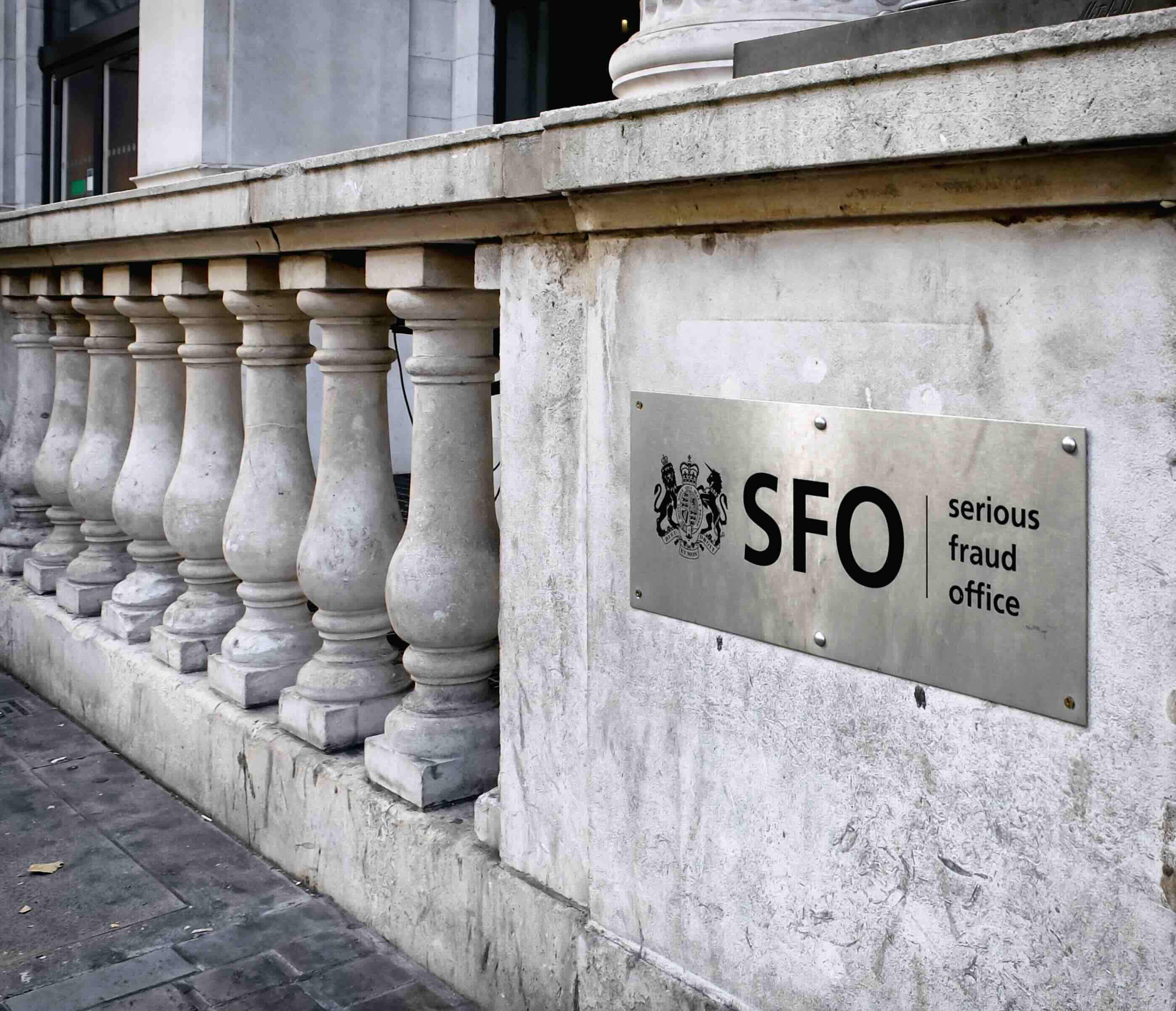
The UK's Serious Fraud Office (SFO) has opened a direct line to its senior legal leadership for companies considering whether to report suspected fraud, bribery or corruption, responding to concerns raised by lawyers since the agency revised its corporate cooperation guidance last year.
The change allows corporate legal representatives to contact Matthew Wagstaff, the SFO's Director of Legal Services and General Counsel, before submitting a formal self-report. Lawyers can now approach him through a dedicated email address, GeneralCounsel@sfo.gov.uk, to discuss a potential disclosure.
Wagstaff announced the revision at the International White Collar Institute in London, hosted by the American Bar Association. The SFO said the change followed feedback from legal practitioners on guidance introduced in April 2025, which set out stronger commitments to companies that voluntarily disclose suspected criminal conduct and cooperate with investigators.
"We believe a swifter, clearer path to enter negotiations for a deferred prosecution agreement is in the best interests of everyone and so we've taken this feedback on board," Wagstaff said in remarks prepared for the event.
The direct contact arrangement gives companies an opportunity to discuss a possible self-report with the SFO's senior legal leadership before deciding whether to proceed. It is an optional step, and the agency has not changed the underlying requirements for obtaining consideration for a deferred prosecution agreement (DPA).
Under the April 2025 guidance, companies that promptly report suspected wrongdoing and cooperate fully will, barring exceptional circumstances, be invited to enter DPA negotiations. A DPA allows a company to avoid prosecution if it complies with agreed conditions, subject to judicial approval. An invitation to negotiate does not guarantee that an agreement will be reached.
The guidance also established expectations for the SFO's handling of corporate disclosures. The agency committed to making contact within 48 business hours of receiving a self-report, providing regular updates and deciding whether to open an investigation within six months. It also said investigations would be pursued within a prompt timeframe.
Those commitments remain in place. The October revisions address two further aspects of the process that can influence how companies conduct internal investigations and approach negotiations with prosecutors.
First, the SFO has clarified that companies are expected to take a proportionate, risk-based approach to identifying the full extent of criminal offending. The clarification concerns the scope of work businesses undertake to establish what has occurred, particularly when suspected misconduct may involve multiple employees, transactions or parts of an organization. The requirement to cooperate fully remains unchanged. The updated guidance makes clear, however, that identifying the extent of potential wrongdoing should be approached according to the risks and circumstances involved.
Second, the SFO has clarified when its six-month period for concluding DPA negotiations begins. That period runs from the point at which a company accepts an invitation to negotiate, rather than from its initial contact with prosecutors or the submission of a self-report.
The clarification gives companies a more definite understanding of the negotiation timetable, although it does not establish a six-month deadline for completing the wider investigative process.
Wagstaff acknowledged in his prepared remarks that there are limits to the assurances prosecutors can provide companies considering voluntary disclosure.
"As a responsible prosecutor, there will rightly always be limits to the commitments that we can make," he said. "Nevertheless, I believe that in this guidance we have challenged ourselves as an organisation to make the strongest possible offer to responsible corporates."
The changes leave the SFO's central offer to cooperating companies intact while addressing practical questions raised since the April 2025 guidance took effect. Companies considering self-reporting now have a direct means of approaching the agency's General Counsel, alongside clearer expectations concerning the scope of internal investigations and the timetable for DPA negotiations.
The GRC Report is your premier destination for the latest in governance, risk, and compliance news. As your reliable source for comprehensive coverage, we ensure you stay informed and ready to navigate the dynamic landscape of GRC. Beyond being a news source, the GRC Report represents a thriving community of professionals who, like you, are dedicated to GRC excellence. Explore our insightful articles and breaking news, and actively participate in the conversation to enhance your GRC journey.
Sponsored by
